How to Design a Shared Kids Room for a Boy and Girl (UK Guide) Boy & Girl Shared Bedroom Ideas: A UK Step-by-Step Guide

A UK step-by-step guide to designing a shared kids room for a boy and a girl. Zone-based layouts, dividers, bunks and neutral palettes that actually work

The simplest way to design a shared kids room for a boy and girl in the UK is to split the bedroom into three zones — sleep, play and personal — then use bunk beds or a divider to create a sense of territory for each child. Searches for shared kids rooms are up 473% on Pinterest UK in 2026, and a well-zoned shared bedroom can comfortably fit two children of different genders in as little as 7 square metres.
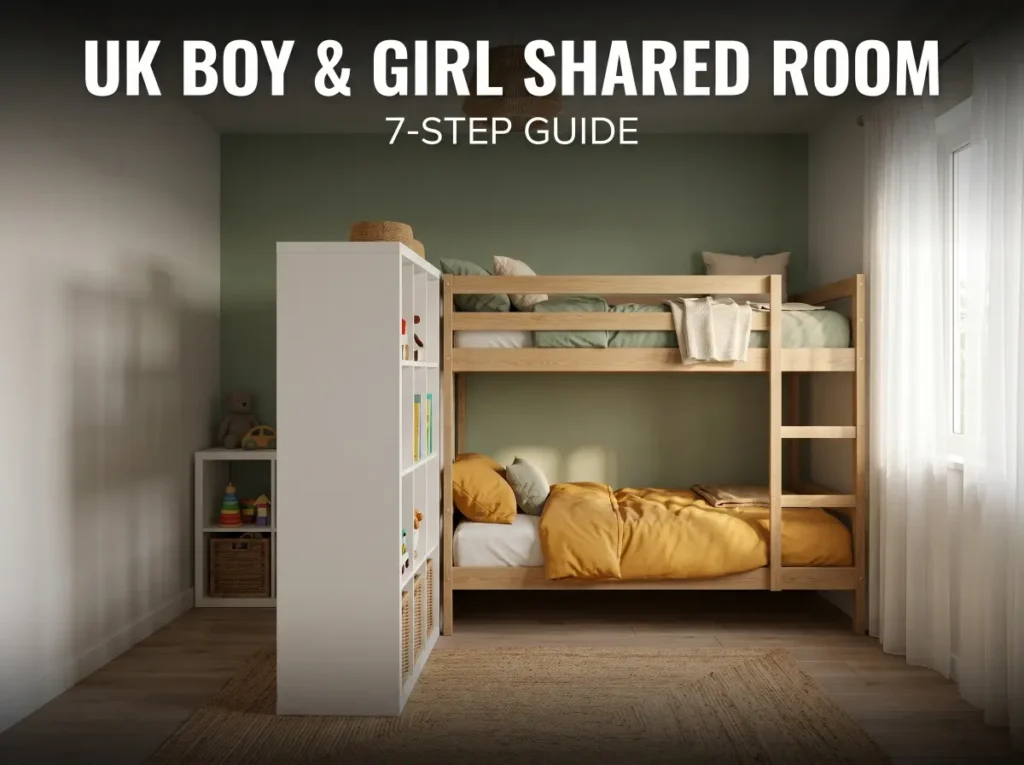
These are natural wooden bunk beds styled for a small bedroom

If you are reading this in a British house with one box room and two kids of different genders, you already know the assignment. The good news: a boy and girl shared bedroom is not only doable in a UK home, it is one of the most-saved kids room concepts on Pinterest right now. Pinterest UK searches for “shared kids rooms” are up 473% year on year. The problem is that most of the ideas you see are American — wide rooms, big windows, no terraced-house constraints. This UK guide is built around the rooms you actually have. Seven steps, real measurements, and UK-shoppable products.

 Measure the Room and Map the Constraints
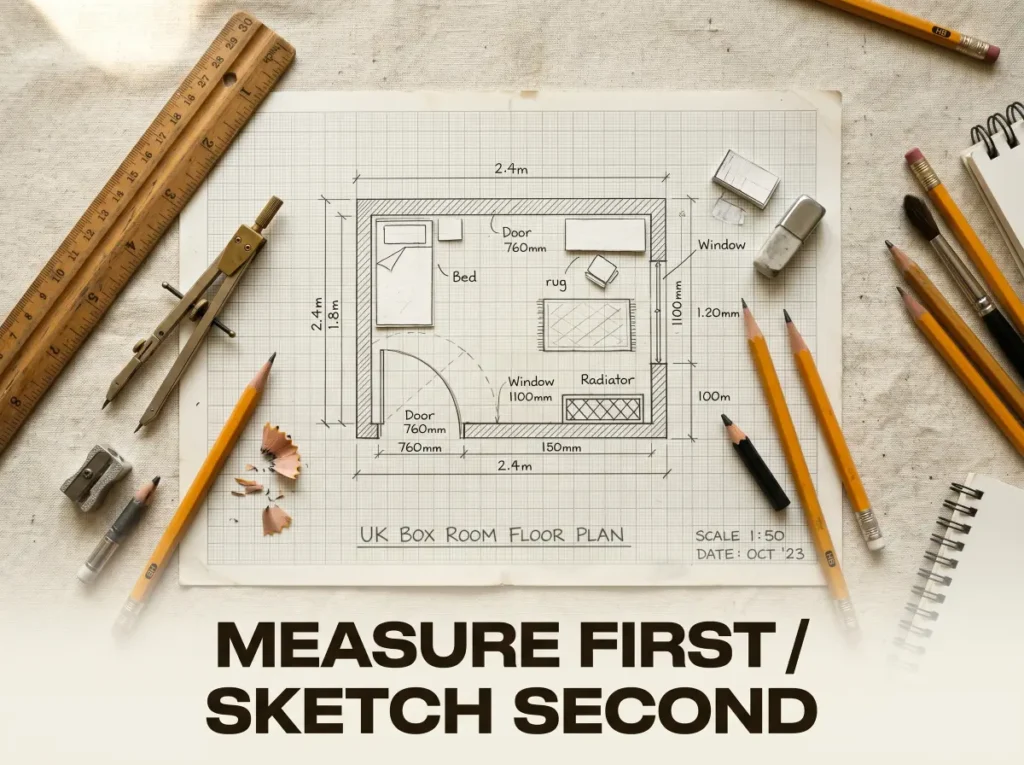
Based on the technical drawing provided, here are the details regarding the room layout

 Before buying anything, measure the room corner to corner, note where the door, window, radiator and plug sockets sit, and sketch it on graph paper at a scale of 1 cm = 20 cm. A typical UK box room is between 6 and 9 square metres. Knowing the exact footprint decides whether bunks, parallel beds or a divider layout will actually fit.

A 2 cm tape on a piece of paper is enough — no design app required. Mark the swing of the door (it eats roughly one square metre of usable floor) and the height clearance under any sloped ceiling. Most UK box rooms have one window and one radiator on opposite walls, which limits where a bed can sit. Photograph the empty room from each corner so you can plan furniture placement away from the room itself.

 Three Zones (Sleep, Play, Personal)

 Every shared kids room needs three zones — sleep, play and personal. Sleep should take the largest share of the floor space, play sits in the middle for shared use, and each child gets a personal zone of their own (a corner, a shelf, or a desk) that the sibling doesn’t touch.

Zoning is what stops a shared bedroom feeling like a hostel. Sleep is the only zone that needs to be quiet at the same time for both kids, so it goes on the wall furthest from the door. Play is intentionally shared — one zone, shared toys, shared rug — to encourage sibling bonding. The personal zone is the sanity-saver: a 60 cm wide wall slice per child, with a peg rail, a bedside light and one shelf for their own treasures. Not babyish, just respectful.
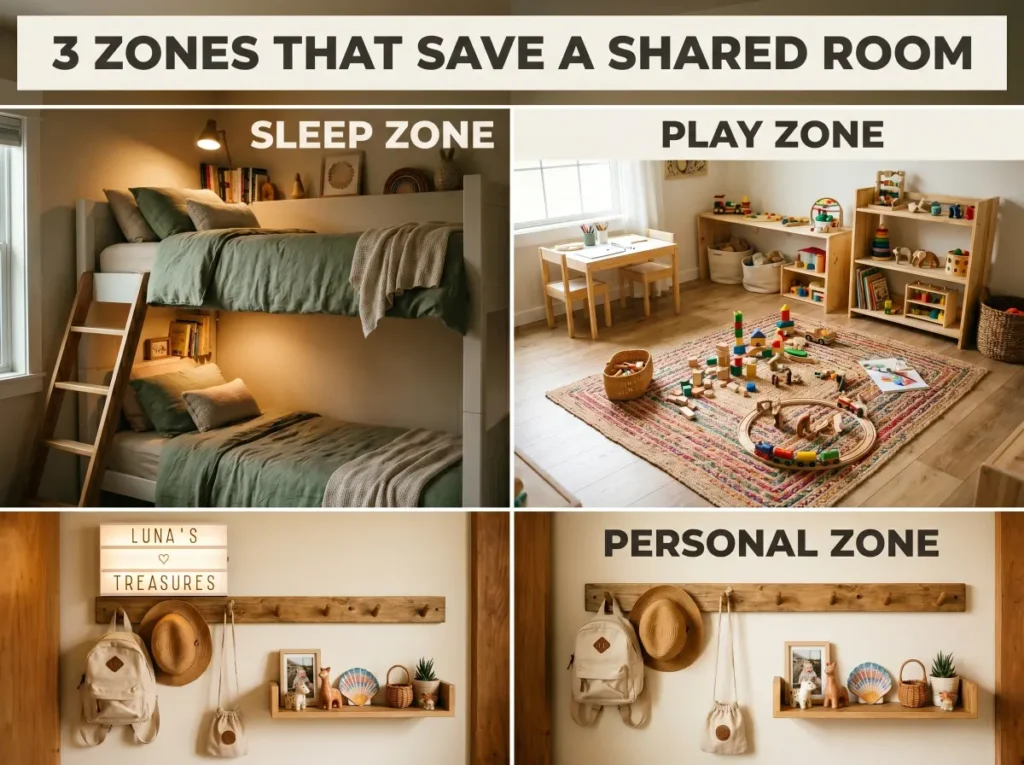
illustrates strategies for maximizing small shared rooms by dividing them into distinct functional areas

 Choose Your Layout

natural wood bunk bed frame, similar to models like the Habitat Detachable Pine Bunk Bed

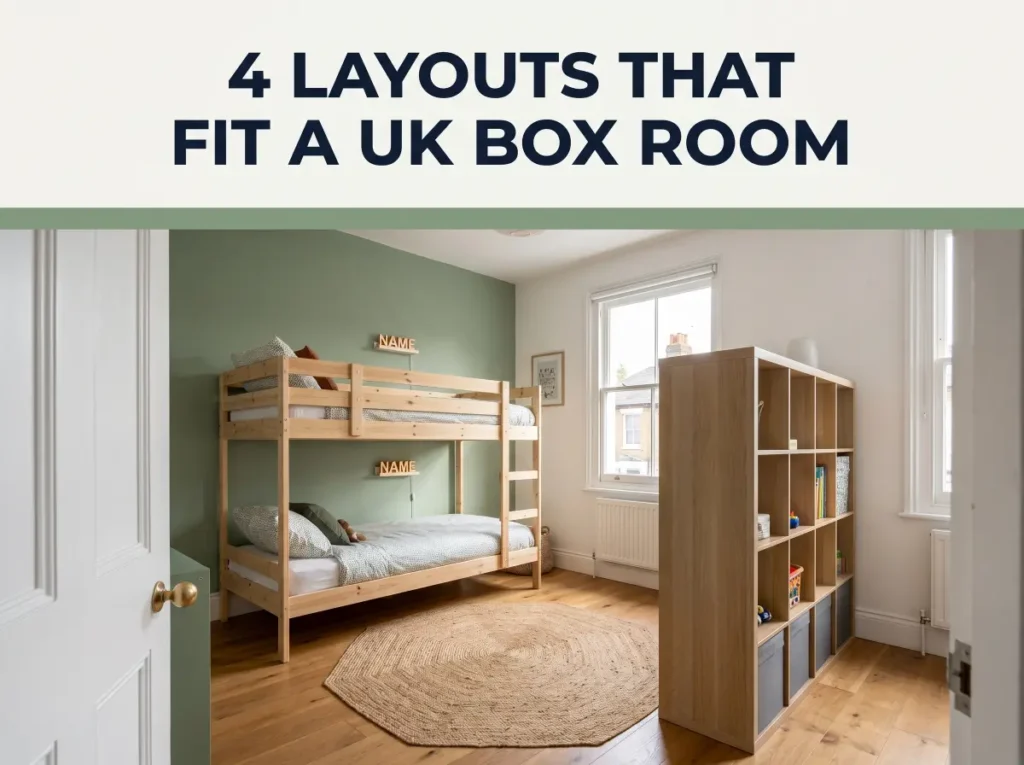
There are four shared bedroom layouts that work in a UK box room. Bunk beds for rooms under 7 m², parallel single beds along opposite walls for narrow rooms over 8 m², an L-shape for square 9 m² rooms, and a divided layout where a low partition splits the room down the middle for rooms above 10 m².

Bunks are the default for UK box rooms because they keep the floor clear for the play zone. A good UK kids bunk from Wayfair averages £400–£600 and lasts from toddler to early-teen years. Parallel beds work where the room is narrow but long — keep at least 80 cm walking space between them. L-shape layouts free up one full wall for storage. The full-divider layout is the dream for kids who want privacy but only fits when the room is genuinely big enough to lose 30 cm of width to a partition.

 Pick a Shared, Gender-Neutral Palette

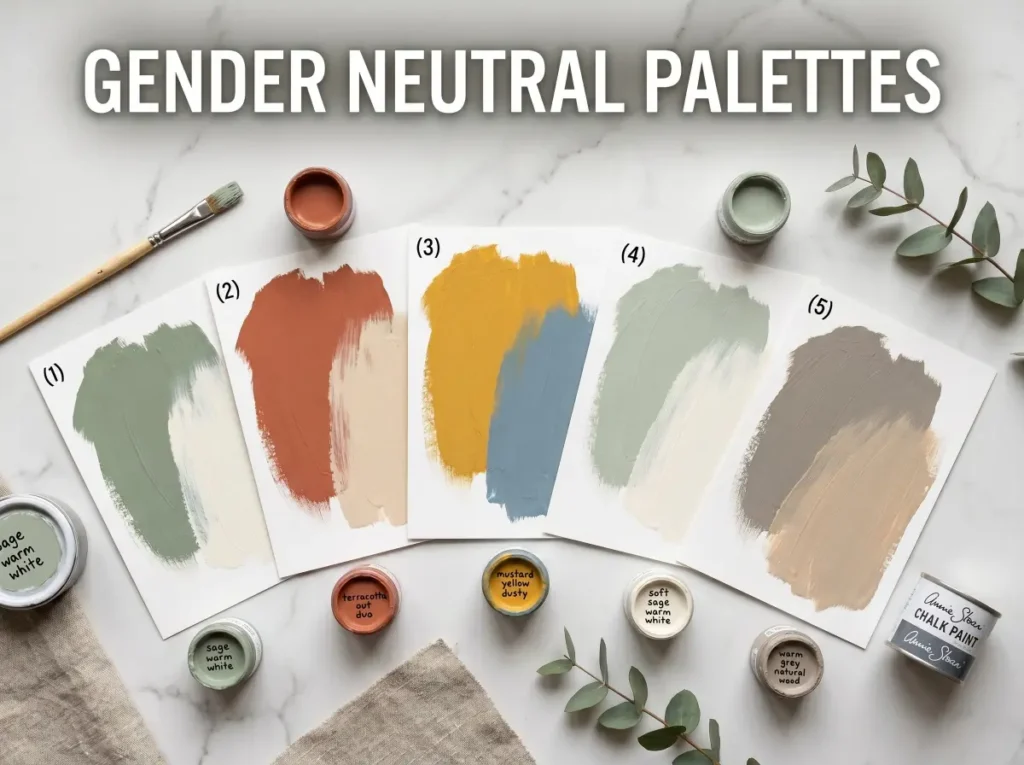
The five UK paint palettes that work for any boy-and-girl shared bedroom in 2026 are sage green and soft black, warm terracotta and oat, mustard and dusty blue, soft sage and warm white, and warm grey with natural wood. None of them lean pink or blue, so neither child feels boxed into a stereotype.

Sage green and warm terracotta are the two strongest sellers on UK Pinterest in 2026, both featured in the Pinterest 2026 Parenting Report. Paint one feature wall behind the beds and keep the other three walls in warm white or oat — small UK rooms get heavy fast. Avoid pure greys, which read cold in north-facing British rooms. Frenchic, Annie Sloan and Little Greene are the UK paint brands that get this right.
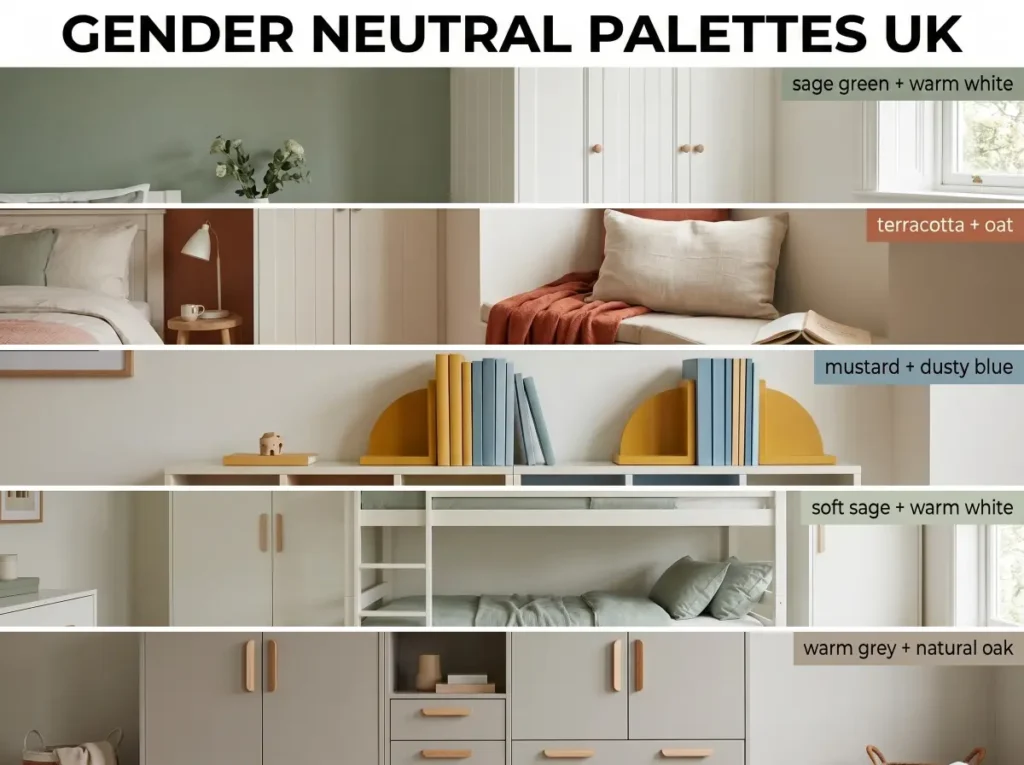
gender-neutral bedroom design

Solve the Divider Question

Gender-neutral color palettes

A shared boy and girl bedroom benefits from a soft divider once the older child reaches age 6. The four UK favourites are an IKEA KALLAX unit (£60+, doubles as storage), a floor-to-ceiling curtain on a track (£25+), a low partition wall (£200+ DIY), or a slatted timber screen (£150+).

KALLAX as a divider is the highest-value option — it creates visual separation and adds 16 cubes of storage in one move. A curtain divider is the cheapest and rental-friendly favourite, and a track from Amazon UK runs about £25. Slatted timber screens look beautiful but cut the light; only use them in rooms with a south-facing window. Whatever you choose, leave a clear walking gap on at least one side so neither child feels trapped.

Plan Shared and Personal Storage

Shared bedroom storage works best on the 70/30 rule — 70% of storage is shared (books, dress-up, toys), and 30% is personal (clothes, school bag, private treasures). Label or colour-code each child’s personal storage so neither has to ask a sibling for their own jumper.

A single KALLAX or two Trofast units handles the shared half. For personal storage, give each child a labelled drawer in a shared chest, a labelled coat peg, and one closed shelf. Under-bed boxes work brilliantly under bunks. Avoid open toy storage in the sleep zone — it makes a small room feel chaotic at bedtime. Use colour-coded laundry bags from Dunelm so even the youngest sibling can sort their own washing.
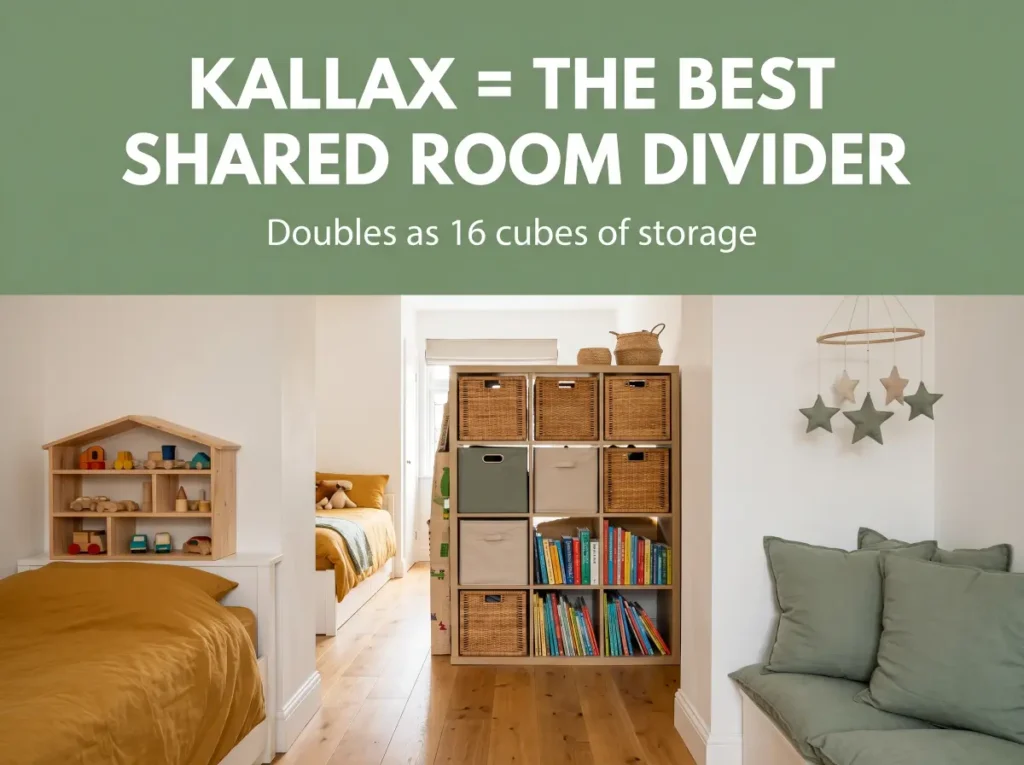
KALLAX shelf unit, specifically positioned as a versatile shared room divider.

Make It Fair — Give Each Child a Territory
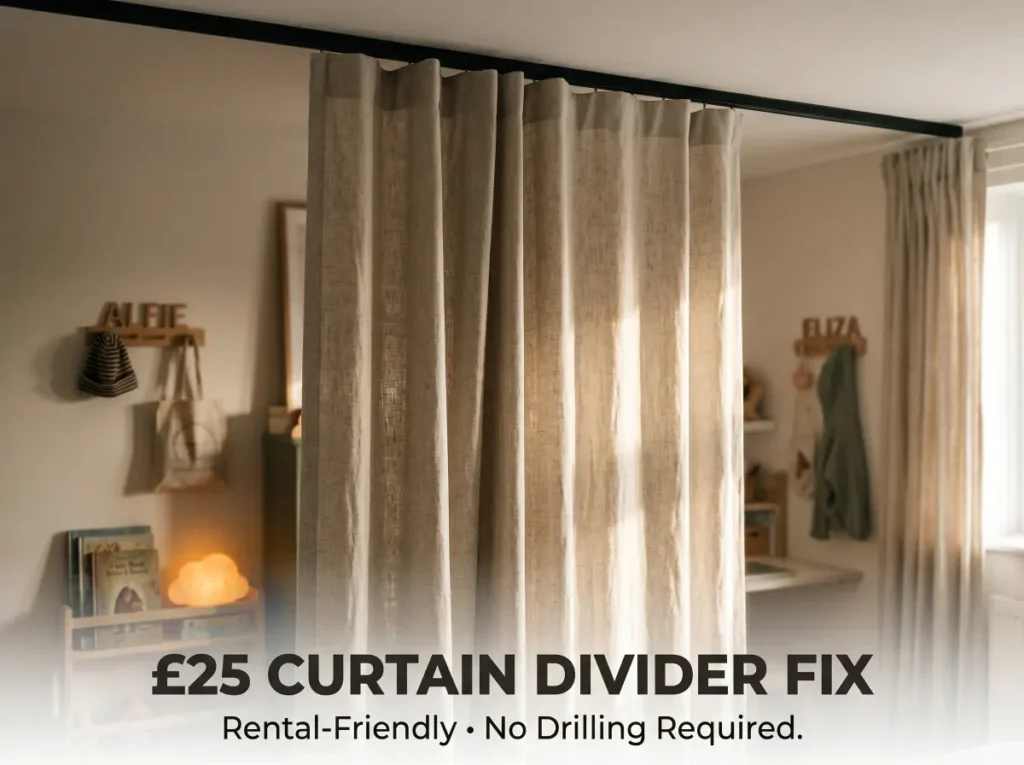
 linen-textured curtains, likely in a natural or beige color, used as a room

The single biggest reason shared bedrooms fail is that one child feels the room “belongs to” the other. Fix this with three small moves — a personal peg rail with their name, a bedside reading light per child, and a 30 cm wide gallery wall above each bed that the child controls.

Children aged 5+ understand “your bit, my bit” instinctively. Once each sibling has visible territory, daily friction drops. Bedside name lights from Amazon UK cost about £14 each and double as nightlights. Let each child curate the art above their own bed — postcards, drawings, a single framed photo. The shared wall stays neutral; the personal walls express each kid. This is the move UK parents on Mumsnet say worked when nothing else did.

Common Mistakes to Avoid

The shared bedroom mistakes UK parents regret most are easy to dodge once you know them:

  • Splitting the room down the middle in pink/blue. It dates immediately and limits how either child decorates.
  • Buying matching everything. Personal zones need visible difference.
  • Skipping the divider too long. Once the older child hits 7, soft separation is non-negotiable.
  • Overstuffing storage. A small UK room needs fewer toys, not more bins.
  • Forgetting the door swing. It eats a square metre. Plan around it first.

Pure grey or pure white walls. Both make small UK rooms feel like waiting areas. Use warm neutrals.

Yes. There is no UK housing law that prevents siblings of different genders sharing a bedroom. UK social housing guidance from the government suggests separate rooms are typically considered from around age 10, but many UK families share happily well beyond that age. The decision is yours.

There is no fixed legal age. UK social housing guidance considers separate rooms from age 10 onwards, but most parenting experts suggest letting your children’s own readiness for privacy guide the timing. Soft dividers, separate zones and personal storage extend the comfortable sharing window by several years.

Two children can share a room as small as 7 square metres if you use a bunk bed and zoned storage. Below 6 square metres becomes tight for play space. The single most important factor is ceiling height — a 2.4 m ceiling makes bunks viable; under 2.2 m, parallel beds work better.

The best layout for a UK box room (under 8 m²) is a bunk bed against the longest wall with KALLAX storage on the opposite wall as both divider and toy storage. For rooms over 9 m², parallel single beds with a curtain divider between them give each child more privacy.

A divider is not mandatory at any age but becomes useful once the older child reaches 6. Even a curtain on a £25 ceiling track creates a sense of personal space that reduces sibling friction at bedtime.

Use warm gender-neutral palettes — sage green, terracotta, mustard, oat, soft black or warm grey. Paint one feature wall and keep the other three warm white. Each child personalises a small gallery wall above their own bed.

Conclusion

A shared boy and girl bedroom in a UK home is not a compromise — it is a design opportunity. Measure first, zone second, decide on a layout third, and let each child own a small corner of territory. The 473% UK Pinterest spike on shared kids rooms is built on parents discovering exactly this: a well-zoned, neutral, divider-soft bedroom works for two siblings, often for years longer than they expected. Start with the bunk, the divider and the neutral palette this weekend, and add the personal touches over the next month. Bookmark this guide for when your kids ask for “their own corner” — every step here is designed to make that conversation easy.

Leave a Reply

Your email address will not be published. Required fields are marked *

How to Design a Shared Kids Room for a Boy and Girl (UK Guide) Boy & Girl Shared Bedroom Ideas: A UK Step-by-Step Guide

A UK step-by-step guide to designing a shared kids room for a boy and a girl. Zone-based layouts, dividers, bunks and neutral palettes that actually work

The simplest way to design a shared kids room for a boy and girl in the UK is to split the bedroom into three zones — sleep, play and personal — then use bunk beds or a divider to create a sense of territory for each child. Searches for shared kids rooms are up 473% on Pinterest UK in 2026, and a well-zoned shared bedroom can comfortably fit two children of different genders in as little as 7 square metres.

These are natural wooden bunk beds styled for a small bedroom

If you are reading this in a British house with one box room and two kids of different genders, you already know the assignment. The good news: a boy and girl shared bedroom is not only doable in a UK home, it is one of the most-saved kids room concepts on Pinterest right now. Pinterest UK searches for “shared kids rooms” are up 473% year on year. The problem is that most of the ideas you see are American — wide rooms, big windows, no terraced-house constraints. This UK guide is built around the rooms you actually have. Seven steps, real measurements, and UK-shoppable products.

 Measure the Room and Map the Constraints

Based on the technical drawing provided, here are the details regarding the room layout

 Before buying anything, measure the room corner to corner, note where the door, window, radiator and plug sockets sit, and sketch it on graph paper at a scale of 1 cm = 20 cm. A typical UK box room is between 6 and 9 square metres. Knowing the exact footprint decides whether bunks, parallel beds or a divider layout will actually fit.

A 2 cm tape on a piece of paper is enough — no design app required. Mark the swing of the door (it eats roughly one square metre of usable floor) and the height clearance under any sloped ceiling. Most UK box rooms have one window and one radiator on opposite walls, which limits where a bed can sit. Photograph the empty room from each corner so you can plan furniture placement away from the room itself.

 Three Zones (Sleep, Play, Personal)

 Every shared kids room needs three zones — sleep, play and personal. Sleep should take the largest share of the floor space, play sits in the middle for shared use, and each child gets a personal zone of their own (a corner, a shelf, or a desk) that the sibling doesn’t touch.

Zoning is what stops a shared bedroom feeling like a hostel. Sleep is the only zone that needs to be quiet at the same time for both kids, so it goes on the wall furthest from the door. Play is intentionally shared — one zone, shared toys, shared rug — to encourage sibling bonding. The personal zone is the sanity-saver: a 60 cm wide wall slice per child, with a peg rail, a bedside light and one shelf for their own treasures. Not babyish, just respectful.

illustrates strategies for maximizing small shared rooms by dividing them into distinct functional areas

 Choose Your Layout

natural wood bunk bed frame, similar to models like the Habitat Detachable Pine Bunk Bed

There are four shared bedroom layouts that work in a UK box room. Bunk beds for rooms under 7 m², parallel single beds along opposite walls for narrow rooms over 8 m², an L-shape for square 9 m² rooms, and a divided layout where a low partition splits the room down the middle for rooms above 10 m².

Bunks are the default for UK box rooms because they keep the floor clear for the play zone. A good UK kids bunk from Wayfair averages £400–£600 and lasts from toddler to early-teen years. Parallel beds work where the room is narrow but long — keep at least 80 cm walking space between them. L-shape layouts free up one full wall for storage. The full-divider layout is the dream for kids who want privacy but only fits when the room is genuinely big enough to lose 30 cm of width to a partition.

 Pick a Shared, Gender-Neutral Palette

The five UK paint palettes that work for any boy-and-girl shared bedroom in 2026 are sage green and soft black, warm terracotta and oat, mustard and dusty blue, soft sage and warm white, and warm grey with natural wood. None of them lean pink or blue, so neither child feels boxed into a stereotype.

Sage green and warm terracotta are the two strongest sellers on UK Pinterest in 2026, both featured in the Pinterest 2026 Parenting Report. Paint one feature wall behind the beds and keep the other three walls in warm white or oat — small UK rooms get heavy fast. Avoid pure greys, which read cold in north-facing British rooms. Frenchic, Annie Sloan and Little Greene are the UK paint brands that get this right.

gender-neutral bedroom design

Solve the Divider Question

Gender-neutral color palettes

A shared boy and girl bedroom benefits from a soft divider once the older child reaches age 6. The four UK favourites are an IKEA KALLAX unit (£60+, doubles as storage), a floor-to-ceiling curtain on a track (£25+), a low partition wall (£200+ DIY), or a slatted timber screen (£150+).

KALLAX as a divider is the highest-value option — it creates visual separation and adds 16 cubes of storage in one move. A curtain divider is the cheapest and rental-friendly favourite, and a track from Amazon UK runs about £25. Slatted timber screens look beautiful but cut the light; only use them in rooms with a south-facing window. Whatever you choose, leave a clear walking gap on at least one side so neither child feels trapped.

Plan Shared and Personal Storage

Shared bedroom storage works best on the 70/30 rule — 70% of storage is shared (books, dress-up, toys), and 30% is personal (clothes, school bag, private treasures). Label or colour-code each child’s personal storage so neither has to ask a sibling for their own jumper.

A single KALLAX or two Trofast units handles the shared half. For personal storage, give each child a labelled drawer in a shared chest, a labelled coat peg, and one closed shelf. Under-bed boxes work brilliantly under bunks. Avoid open toy storage in the sleep zone — it makes a small room feel chaotic at bedtime. Use colour-coded laundry bags from Dunelm so even the youngest sibling can sort their own washing.

KALLAX shelf unit, specifically positioned as a versatile shared room divider.

Make It Fair — Give Each Child a Territory

 linen-textured curtains, likely in a natural or beige color, used as a room

The single biggest reason shared bedrooms fail is that one child feels the room “belongs to” the other. Fix this with three small moves — a personal peg rail with their name, a bedside reading light per child, and a 30 cm wide gallery wall above each bed that the child controls.

Children aged 5+ understand “your bit, my bit” instinctively. Once each sibling has visible territory, daily friction drops. Bedside name lights from Amazon UK cost about £14 each and double as nightlights. Let each child curate the art above their own bed — postcards, drawings, a single framed photo. The shared wall stays neutral; the personal walls express each kid. This is the move UK parents on Mumsnet say worked when nothing else did.

Common Mistakes to Avoid

The shared bedroom mistakes UK parents regret most are easy to dodge once you know them:

  • Splitting the room down the middle in pink/blue. It dates immediately and limits how either child decorates.
  • Buying matching everything. Personal zones need visible difference.
  • Skipping the divider too long. Once the older child hits 7, soft separation is non-negotiable.
  • Overstuffing storage. A small UK room needs fewer toys, not more bins.
  • Forgetting the door swing. It eats a square metre. Plan around it first.

Pure grey or pure white walls. Both make small UK rooms feel like waiting areas. Use warm neutrals.

Yes. There is no UK housing law that prevents siblings of different genders sharing a bedroom. UK social housing guidance from the government suggests separate rooms are typically considered from around age 10, but many UK families share happily well beyond that age. The decision is yours.

There is no fixed legal age. UK social housing guidance considers separate rooms from age 10 onwards, but most parenting experts suggest letting your children’s own readiness for privacy guide the timing. Soft dividers, separate zones and personal storage extend the comfortable sharing window by several years.

Two children can share a room as small as 7 square metres if you use a bunk bed and zoned storage. Below 6 square metres becomes tight for play space. The single most important factor is ceiling height — a 2.4 m ceiling makes bunks viable; under 2.2 m, parallel beds work better.

The best layout for a UK box room (under 8 m²) is a bunk bed against the longest wall with KALLAX storage on the opposite wall as both divider and toy storage. For rooms over 9 m², parallel single beds with a curtain divider between them give each child more privacy.

A divider is not mandatory at any age but becomes useful once the older child reaches 6. Even a curtain on a £25 ceiling track creates a sense of personal space that reduces sibling friction at bedtime.

Use warm gender-neutral palettes — sage green, terracotta, mustard, oat, soft black or warm grey. Paint one feature wall and keep the other three warm white. Each child personalises a small gallery wall above their own bed.

Conclusion

A shared boy and girl bedroom in a UK home is not a compromise — it is a design opportunity. Measure first, zone second, decide on a layout third, and let each child own a small corner of territory. The 473% UK Pinterest spike on shared kids rooms is built on parents discovering exactly this: a well-zoned, neutral, divider-soft bedroom works for two siblings, often for years longer than they expected. Start with the bunk, the divider and the neutral palette this weekend, and add the personal touches over the next month. Bookmark this guide for when your kids ask for “their own corner” — every step here is designed to make that conversation easy.

Similar Posts

Leave a Reply

Your email address will not be published. Required fields are marked *